Oceanbox for Aquaculture

ZONE ANALYTICS — hindcast
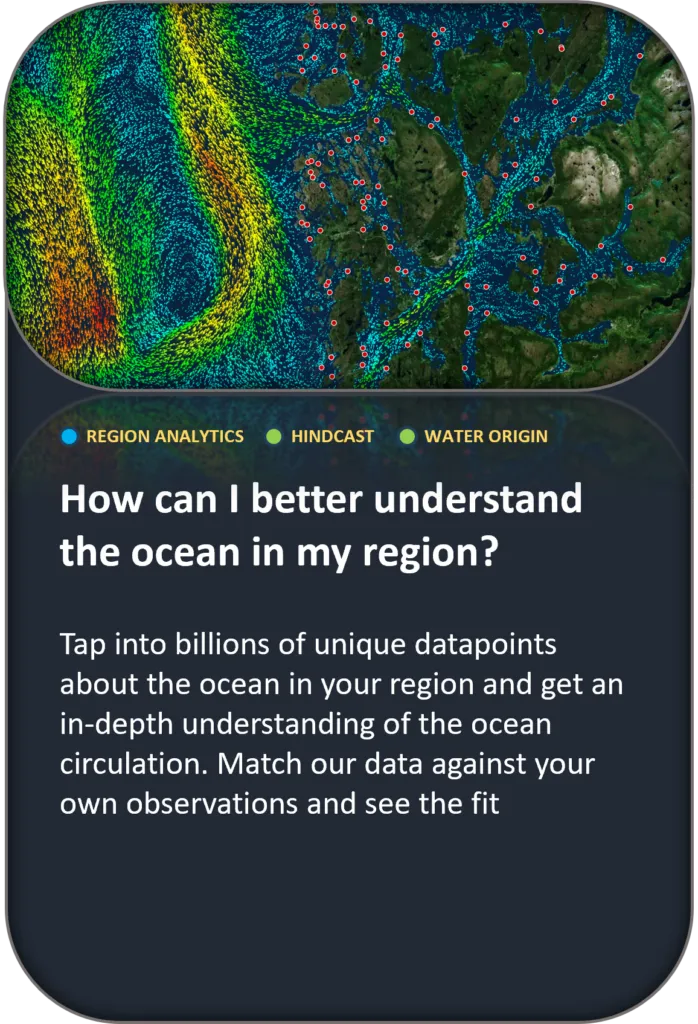
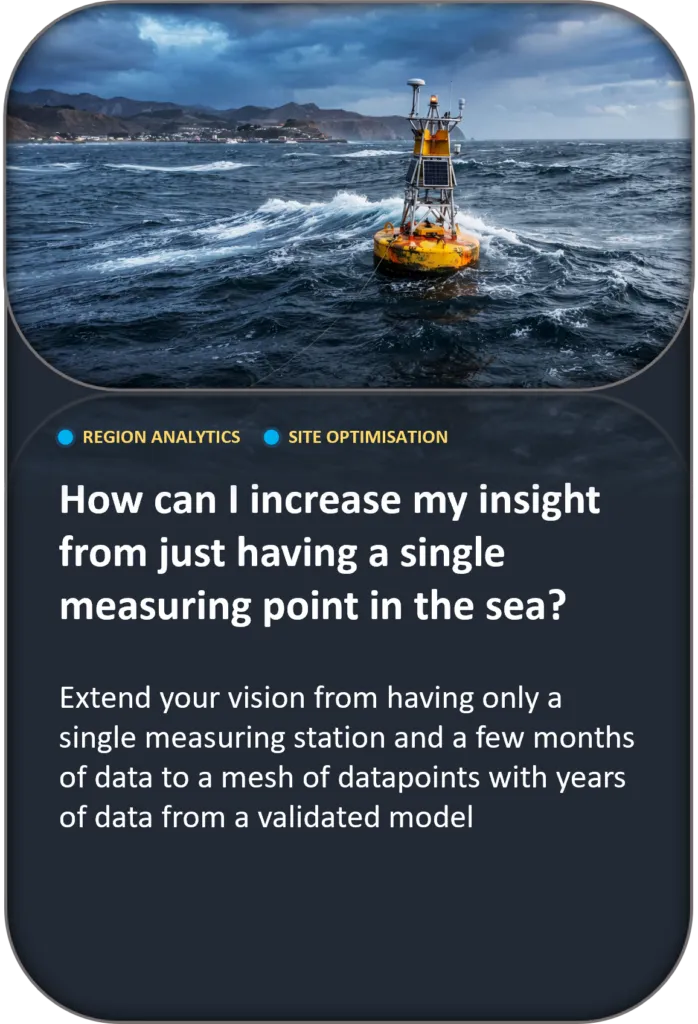
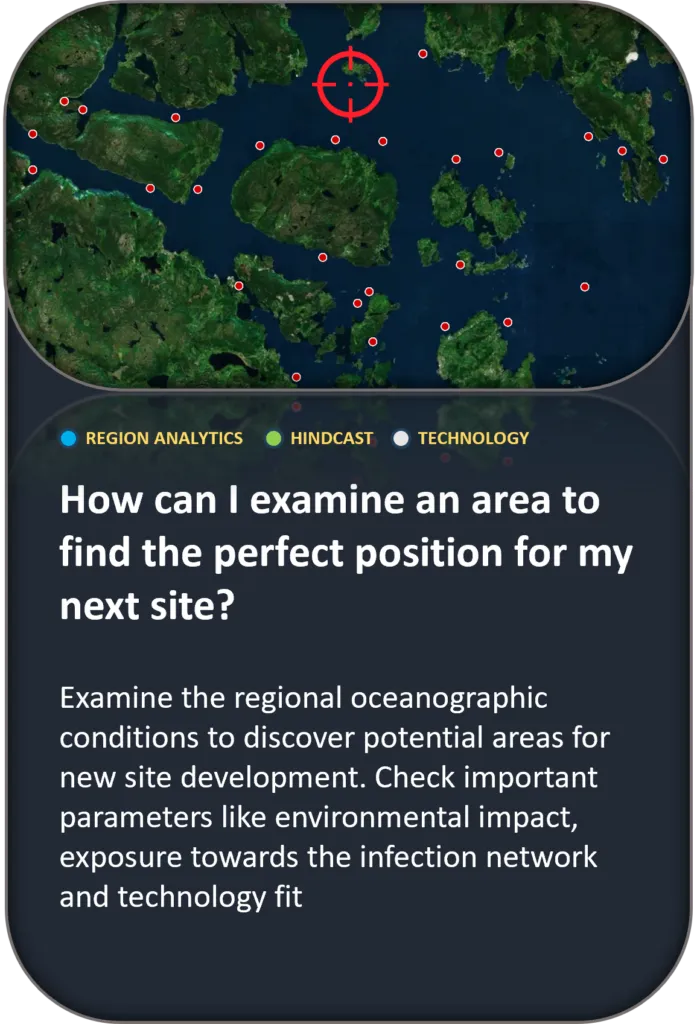
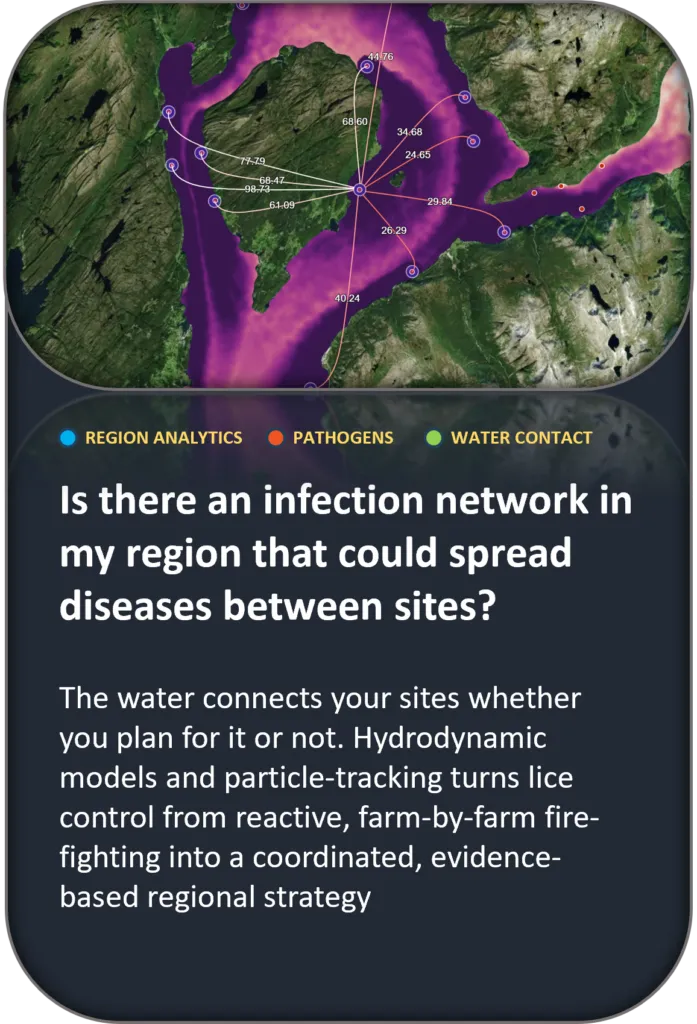
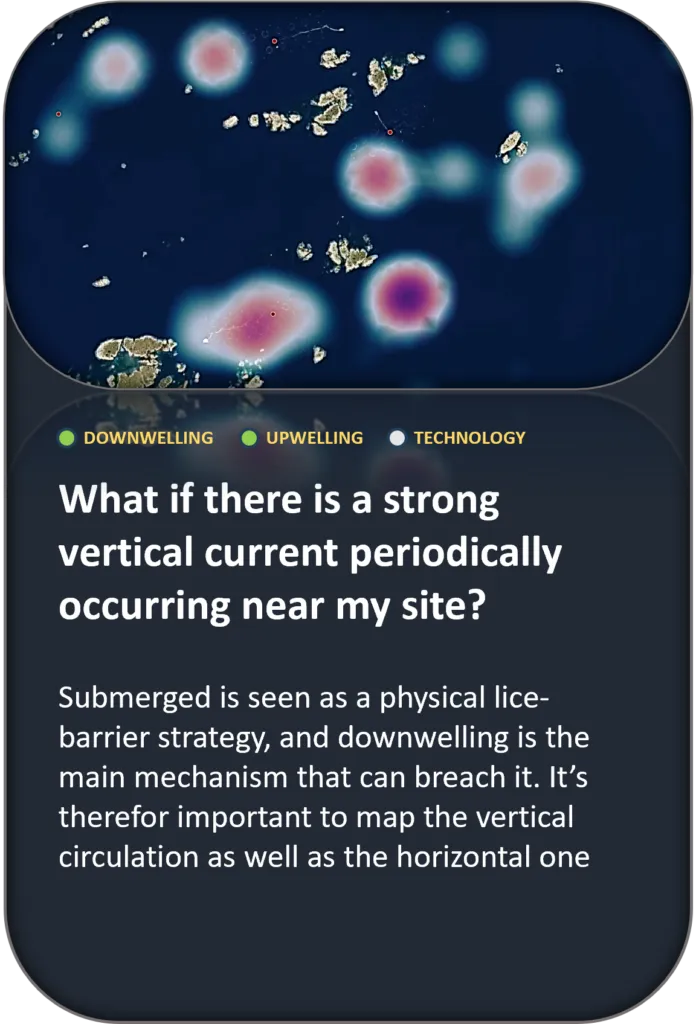
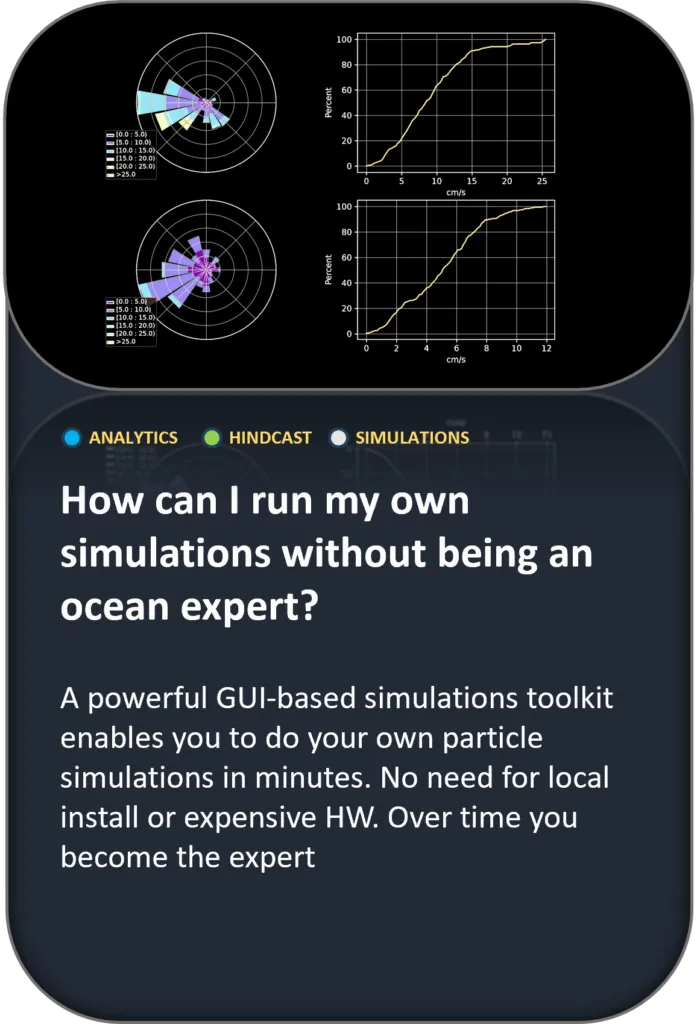
How can I better understand the ocean in my region? Tap into billions of unique datapoints about the ocean in your region and get an in-depth understanding of the ocean circulation. Match our data against your own observations and see the fit How can I increase my insight from just having a single measuring point in the sea? Extend your vision from having only a single measuring station and a few months of data to a mesh of datapoints with years of data from a validated model How can I examine an area to find the perfect position for my next site? Examine the regional oceanographic conditions to discover potential areas for new site development. Check important parameters like environmental impact, exposure towards the infection network and technology fit Is there an infection network in my region that could spread diseases between sites? The water connects your sites whether you plan for it or not. Hydrodynamic models and particle-tracking turns lice control from reactive, farm-by-farm fire-fighting into a coordinated, evidence-based regional strategy What if there is a strong vertical current periodically occurring near my site? Submerged is seen as a physical lice-barrier strategy, and downwelling is the main mechanism that can breach it. It’s therefor important to map the vertical circulation as well as the horizontal one How can I run my own simulations without being an ocean expert? A powerful GUI-based simulations toolkit enables you to do your own particle simulations in minutes. No need for local install or expensive HW. Over time you become the expert


SITE ANALYTICS — hindcast
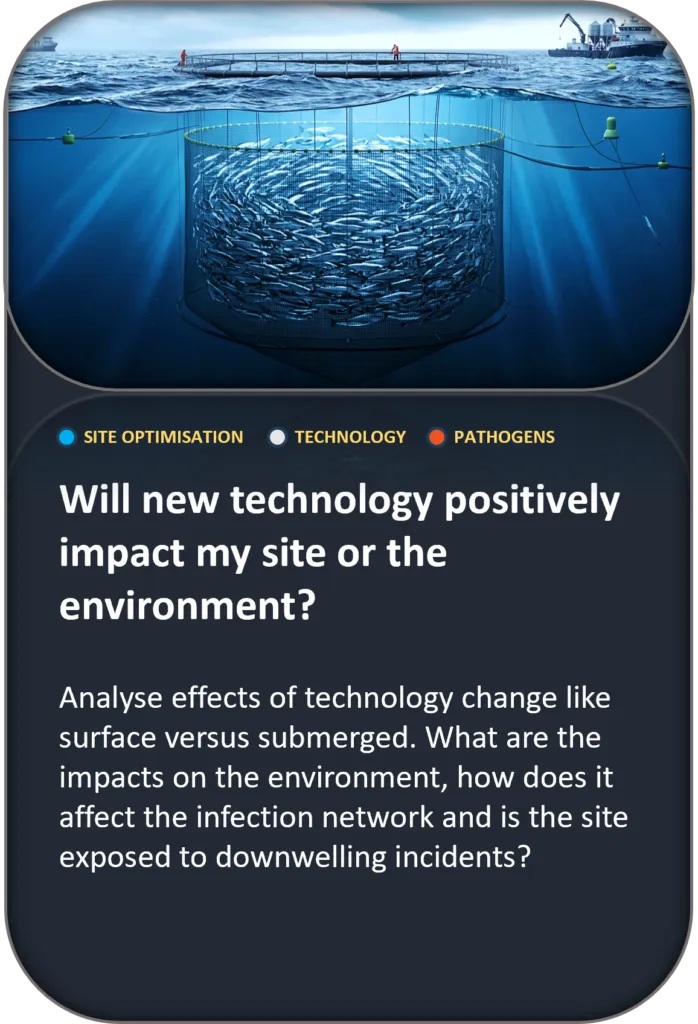
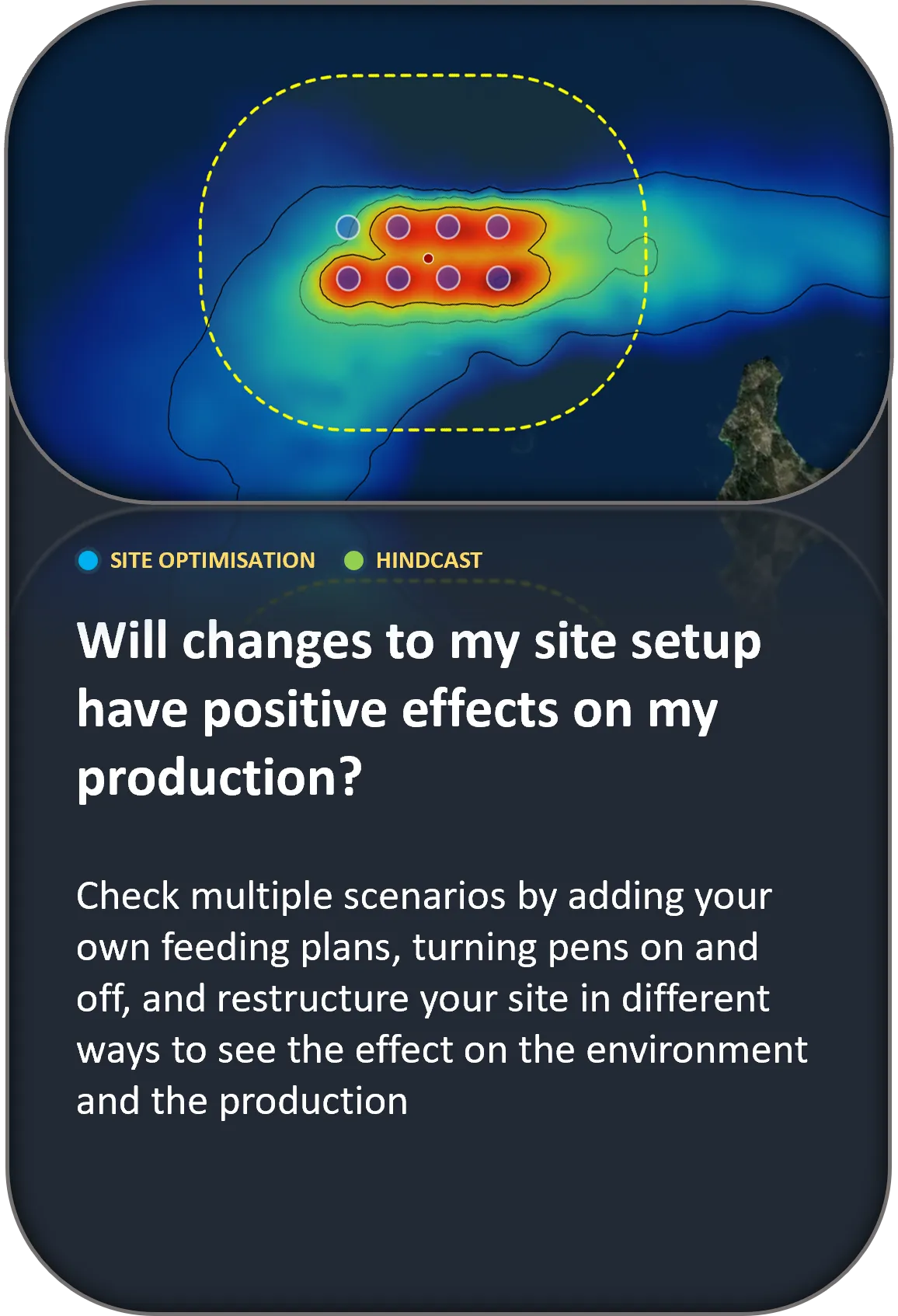
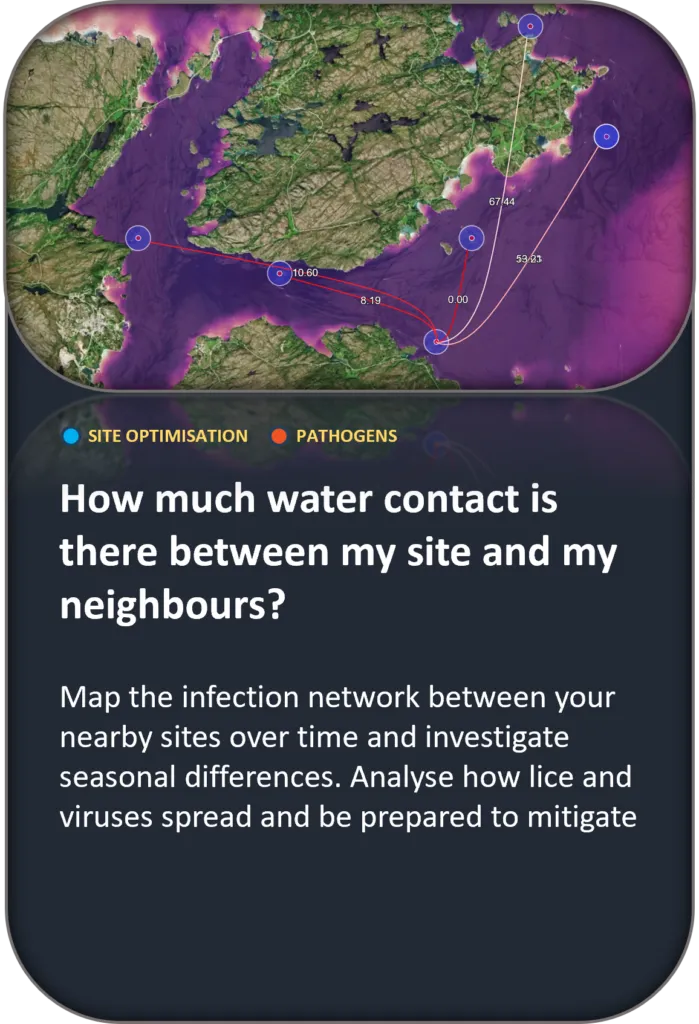
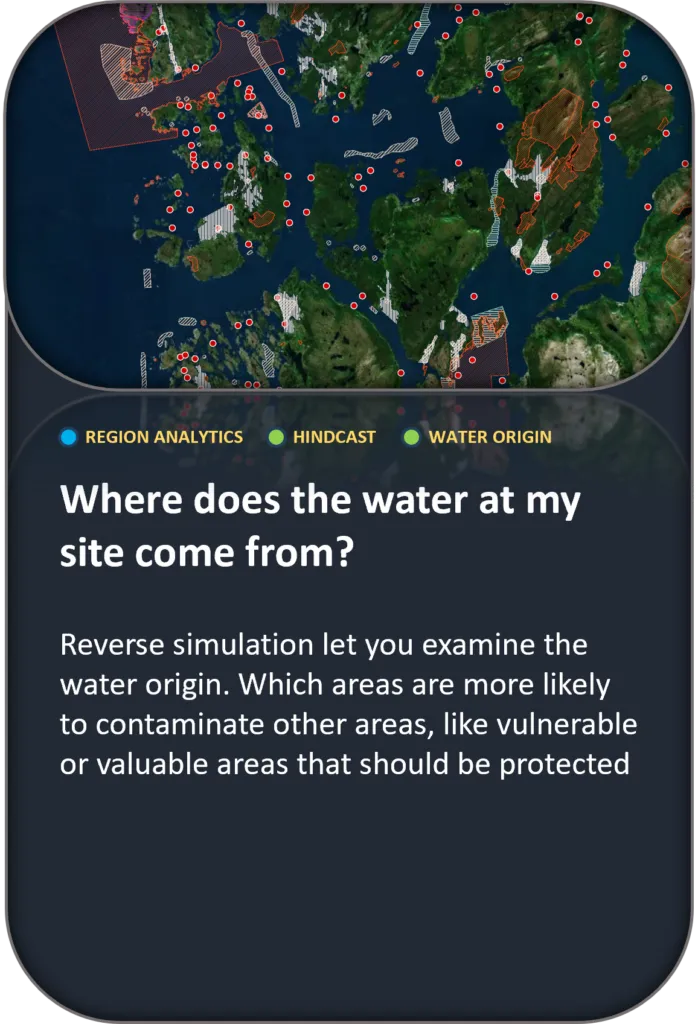
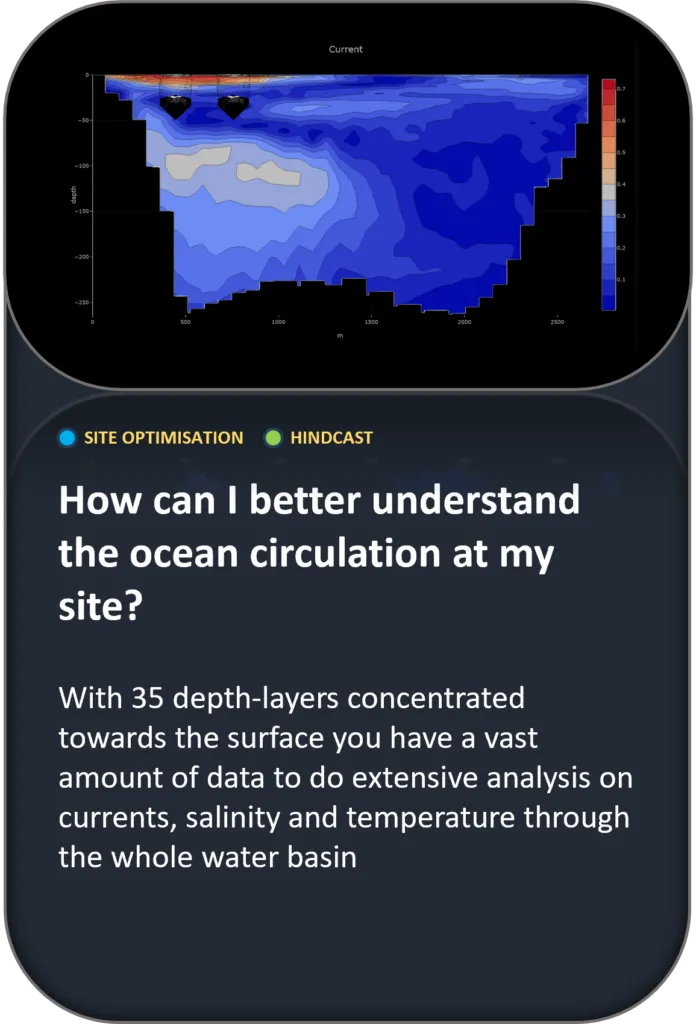
Will changes to my site setup have positive effects on my production? Check multiple scenarios by adding your own feeding plans, turning pens on and off, and restructure your site in different ways to see the effect on the environment and the production How much water contact is there between my site and my neighbours? Map the infection network between your nearby sites over time and investigate seasonal differences. Analyse how lice and viruses spread and be prepared to mitigate What role did the ocean conditions play in previous incidents at my site? Perform retrospective analysis of previous incidents and investigate current conditions at your site, or how lice, virus, algaes or jellyfish may have come from before they hit you Where does the water at my site come from? Reverse simulation let you examine the water origin. Which areas are more likely to contaminate other areas, like vulnerable or valuable areas that should be protected How can I better understand the ocean circulation at my site? With 35 depth-layers concentrated towards the surface you have a vast amount of data to do extensive analysis on currents, salinity and temperature through the whole water basin Will new technology positively impact my site or the environment? Analyse effects of technology change like surface versus submerged. What are the impacts on the environment, how does it affect the infection network and is the site exposed to downwelling incidents?


SITE OPERATIONS — forecast

How can I increase efficiency by including ocean forecasting in my operations planning? Combine our detailed view of future ocean currents, waves and wind at your site and expand your window of operation from days to hours. Reduce wait-states by supporting experience with insight Which pen should I start with when I arrive at the site? Let the conditions decide. Review current, wave, and weather forecasts for the full day, and update as conditions change. Then sequence the pens to make the most of each calm window. Adjusting to the conditions keeps the operations efficient When will unfavourable currents disrupt my operations? Strong currents abort operations, extend feed interruptions, and erode resource efficiency. Worst case: delousing one submerged pen during a downwelling event flushes lice into the neighbouring pens, spreading the very problem you were treating How can I check if algae or jellyfish may hit my site in the next 48 hours? Water origin forecasts combined with visual inspection can show if water arriving at your site in 48 hours originate from areas with high concentration of jellyfish, algal bloom, or a river plume today How do I know if water from a neighbouring site will reach me during the next few days? Daily updates to the infection network will keep you ahead on the amount of water that will be exchanged to and from your site and the sites surrounding you the next few days Can I increase feeding precision by adjusting for changing ocean currents? With depth-resolved current forecasts, you can plan feeding windows in advance and fine-tune spreader position, delivery rate, and flow before the first pellet drops — improving precision and cutting waste


POWERED BY OCEANBOX — API

How can I connect Oceanbox data to equipment inside the pens for better performance? By connecting your technology inside the pen to the Oceanbox forecasting API you can adjust your position with the currents outside the pens to be in the right place at the right time and maximise performance

Frequently asked questions

Everything you need to know before getting started.

Which areas are available?

Oceanbox currently provides high-resolution ocean models covering the entire Norwegian coastline and Scotland. We continuously expand our geographical coverage, and new regions may become available based on customer needs.

How far back goes the archive go?

Oceanbox provides access to an extensive historical archive, making it easy to investigate past ocean conditions and compare events over time. The available time period varies by region, but our Norwegian archive currently extends back to August 2023.

Do I need any software?

No. Oceanbox is a fully cloud-based platform that runs directly in your web browser. There is nothing to install or maintain, allowing you to access your data and simulations from anywhere with an internet connection.

Can I export data?

Yes. Oceanbox allows you to export selected datasets and simulation results for further analysis, reporting, or integration into your own workflows. Available export options depend on your subscription and the type of data being accessed.

How long do simulations take?

Simulation times depend on the selected model, simulation type, geographical area, and time period. Most simulations are completed within a few minutes or hours, while larger or more complex analyses may take longer. Once submitted, simulations run in the cloud, allowing you to continue working while your results are being processed.

For more information, contact us at info@oceanbox.io.